
Earth Day is April 22, 2013; it is a day of environmental
service and awareness. The best way to celebrate is to get outside and help
make a difference for Mother Earth. Ways to get involved include cleaning up at
your local river, planting trees at your local park, or volunteering to help
animals who depend on the habitats around you. For example, you could help
build bird houses or nest boxes for birds during the breeding season. If you
can’t get outside, then donate to a favorite environmental organization;
donating money enables others at the organization to take action when you can’t
take it yourself. Advocacy and donation can be just as rewarding as getting
outside because you’re inspiring others to take action.

One of my favorite non-profit organizations is Panthera, an
organization devoted to wild cat conservation around the world. They strive to
protect lions, tigers, jaguars, snow leopards, cheetahs, cougars, and leopards.
In my eyes, big cats are some of the most majestic creatures on earth. And even
though I can’t make the journey to help make a difference in person, I can
still advocate for and donate money to the numerous Panthera projects targeted
at protecting both the big cats and their habitats. The Panthera programs
include: Save the Tiger Fund, Tigers Forever, Lion Guardians, Project Leonardo,
Pantanal Jaguar Project, Jaguar Corridor Initiative, Snow Leopard Program,
Munyawana Leopard Project, California Cougar Project, Teton Cougar Project, and
the Iranian Cheetah Project.
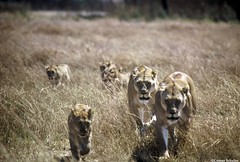
The lion is the big cat currently facing the most danger.
According to a recent press release, Panthera estimates lions at fewer than
30,000 individuals living in just 25% of their original natural habitat. The
press release centers around a newly published report co-authored by “a large
team of lion biologists, including Panthera’s President, Dr. Luke Hunter, and
Lion Program Director, Dr. Guy Balme, entitled Conserving large carnivores: dollars and fence, published in the
scientific journal Ecology Letters, that
concludes nearly half of Africa’s wild lion populations may decline to near
extinction over the next 20-40 years without urgent conservation measures" (Panthera).
The main conservation measure discussed in the report is the
installation of fences in and around Africa’s wilderness. Many scientists
believe the best chance lions have to survive is to be separated from humans by
wildlife-proof fencing. The largest threats lions face are from “human
communities, including retaliatory killing by herders, habitat loss and
fragmentation, and overhunting of lion prey” (Panthera). Even though the report
shows that fences keep conservation costs lower and more lions survive in
fenced-in ecosystems rather than unfenced, Dr. Luke Hunter explained that “No
one wants to resort to putting any more fences around Africa’s marvelous wild
areas [however,] without massive and immediate increases in the commitment to
lion conservation, we may have little choice” (Panthera).
There will never be just one solution, but it’s clear that
separating human and lion populations is essential for their ultimate survival.
In addition to physical boundaries, Panthera conducts “conflict mitigation
initiatives such as Project Leonardo and the Lion Guardians Program” in order
to reduce lion-human conflict.
To learn more about all of Panthera’s programs to protect the
world’s big cats, please visit Panthera.org.
On Earth Day this year, please remember that it’s not just
your actions on this one day that matter, but the actions you take year-round
to make a difference for the earth and all animals that call it home.
For more information on Earth Day 2013 and to find an Earth
Day celebration in your area, please visit the Earth Day Network.


